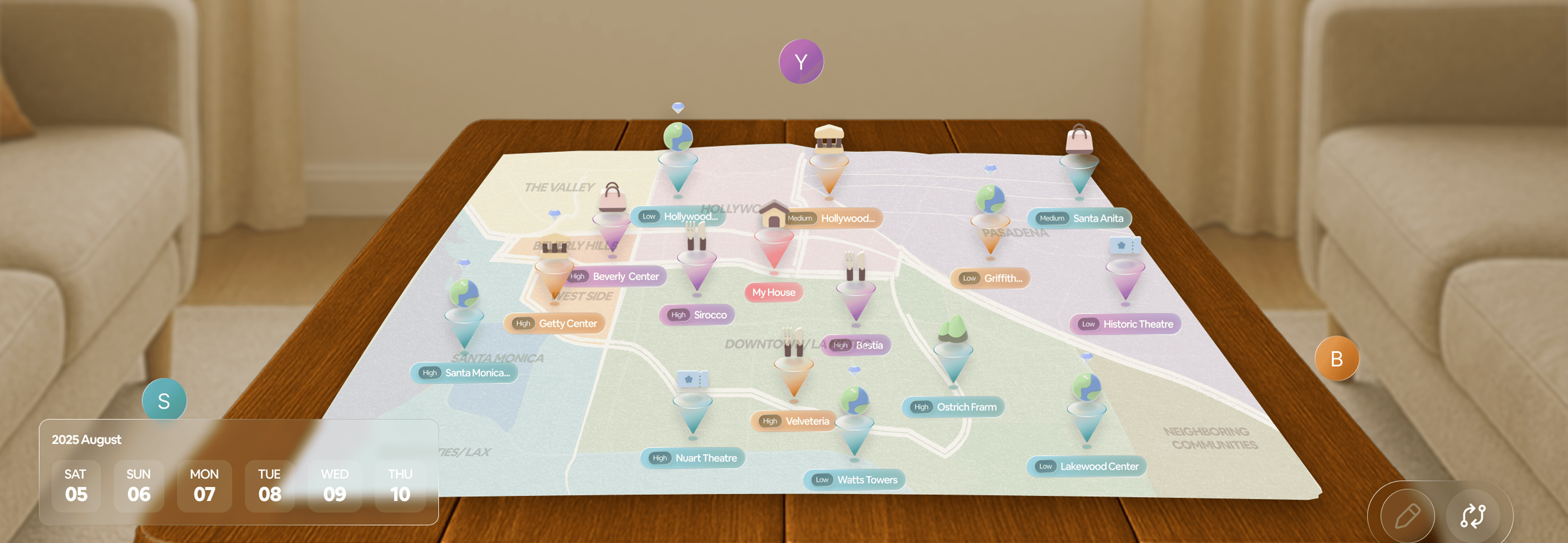
Exploring Future Travel Planning Through Immersive AR for Airbnb
What if group travel planning felt as immersive as the trip itself?
Group travel planning used to be an exciting ritual. But as planning shifted onto digital platforms, the sense of togetherness began to fade into scattered chats and separate screens. Our team began to wonder, “What if technology could bring back that shared joy of decision-making?”
With this question, we saw opportunities to blend physical and digital touch points through immersive augmented reality, making group travel planning more interactive, connected, and human again. We decided to build upon the Airbnb experience and integrate travel planning stages into the platform, utilizing Airbnb’s location datasets to create an engaging spatial format that allows users to explore and understand travel data collaboratively in real time.
Understanding the Problem
What challenges do multi-generational travelers experience?
To understand the needs of multi-generational trip planners, we conducted interviews with three different generations from a family : a grandparent (age 66), a parent (age 43), a teenager (age 17).
These conversations helped reveal differences in tech comfort, engagement levels, and planning expectations across age groups.
Tools & Interface Preferences
•
Users across generations have different levels of digital comfort
•
Design needs a multi-modal interface that supports analog inputs like physical maps, and digital augmentation like AR overlays
Motivations & Emotional Needs
•
Users are motivated by clarity, control, and emotional connection
•
Design should communicate clearly while allowing room for play and personalization—combining functional structure with emotional touch points
Level of Involvement in Planning
•
Current digital planning methods exclude or overload users due to technical barriers and uninviting formats for some generations
•
Design must support collaborative, balanced participation, making each person feel included
Openness to New Technology
•
AR is accepted to older generations as well if it is accessible, easy to use and overall enhances shared experience
•
Design should use AR as a bridge, not a barrier—enabling generational cooperation rather than requiring equal technical skills
Understanding Planning Behaviors
What does trip planning look like across users?
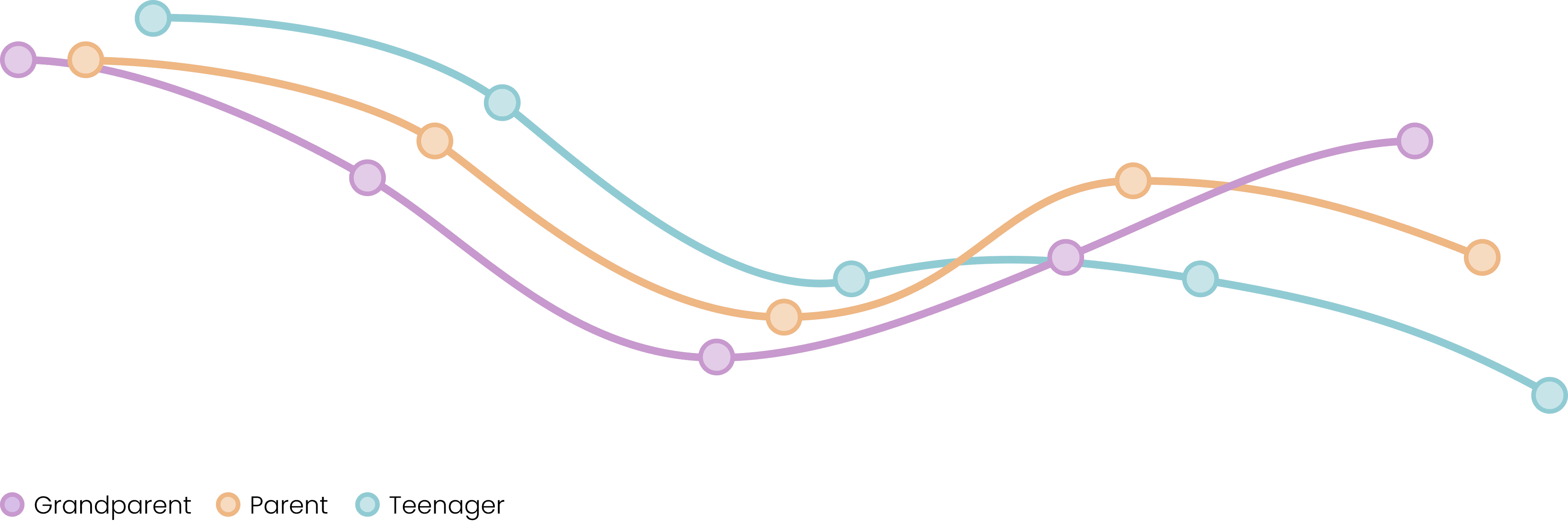
Using the insights from our interviews, we mapped out their journeys to clearly see how their experiences compare and overlap, giving us a clearer view of what trip planning looks like across our users.
Trip Ideation
Research
Choose Places
Finalize Plan
Share Details
•
Early planning stages often lack inclusivity, leaving some family members unsure how to participate
•
All users rely on simple, tangible visuals to stay engaged and understand travel options
•
Research becomes overwhelming due to scattered tabs, maps, chats, and tools
•
Groups struggle to make decisions fairly, often resulting in one person carrying the responsibility
•
Communication gaps across platforms cause important details to get lost or repeated
•
Emotional experiences range widely—from excited and curious to overwhelmed, passive, or left out—depending on the clarity of the process
Defining the Ideal Planning Experience
What would an ideal solution look like?
The goal was to create a shared planning experience that helps multi-generational groups explore options, align decisions, and move forward together. By combining a familiar physical map with an AR interface, the system enables users to visualize destinations, understand location context, and collaborate more intuitively throughout the planning process.
Bridging Physical and Digital
Why bring physical maps into a digital planning experience?
During our interviews, we learned that older generations often prefer analog tools because digital interfaces can feel overwhelming. This insight led us to explore how a physical map can support a more inclusive, multi-generational planning experience. Not only did our interview insights point to this, but several studies also show that physical maps provide a stable, full-view anchor that better supports spatial memory, orientation, and collaborative problem-solving than digital screens alone. Physical maps enable natural gestures—pointing, drawing, placing objects—that keep people engaged and make the experience feel more personal and memorable. By integrating the strengths of physical interaction with the precision of digital data, we aimed to create a planning process that feels intuitive, shared, and accessible to everyone at the table.
Iterating Through Prototyping
How did early prototyping and user testing shape our flow?
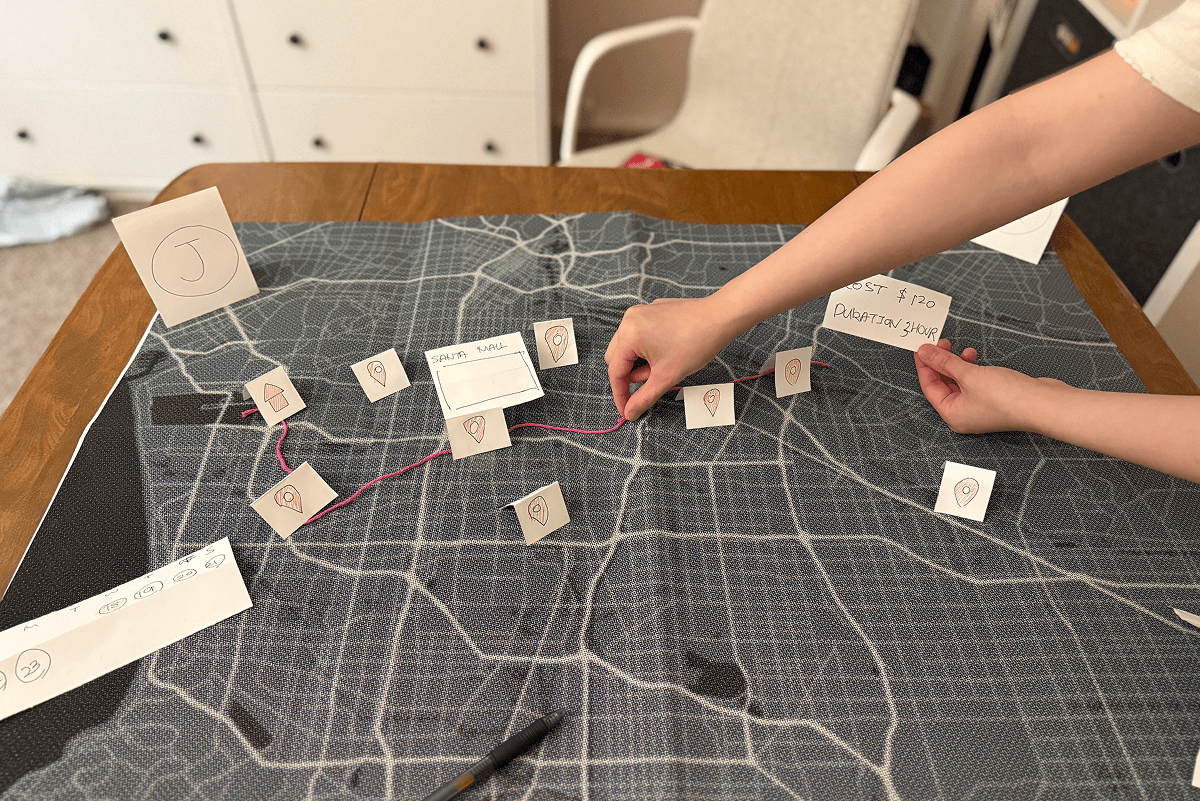
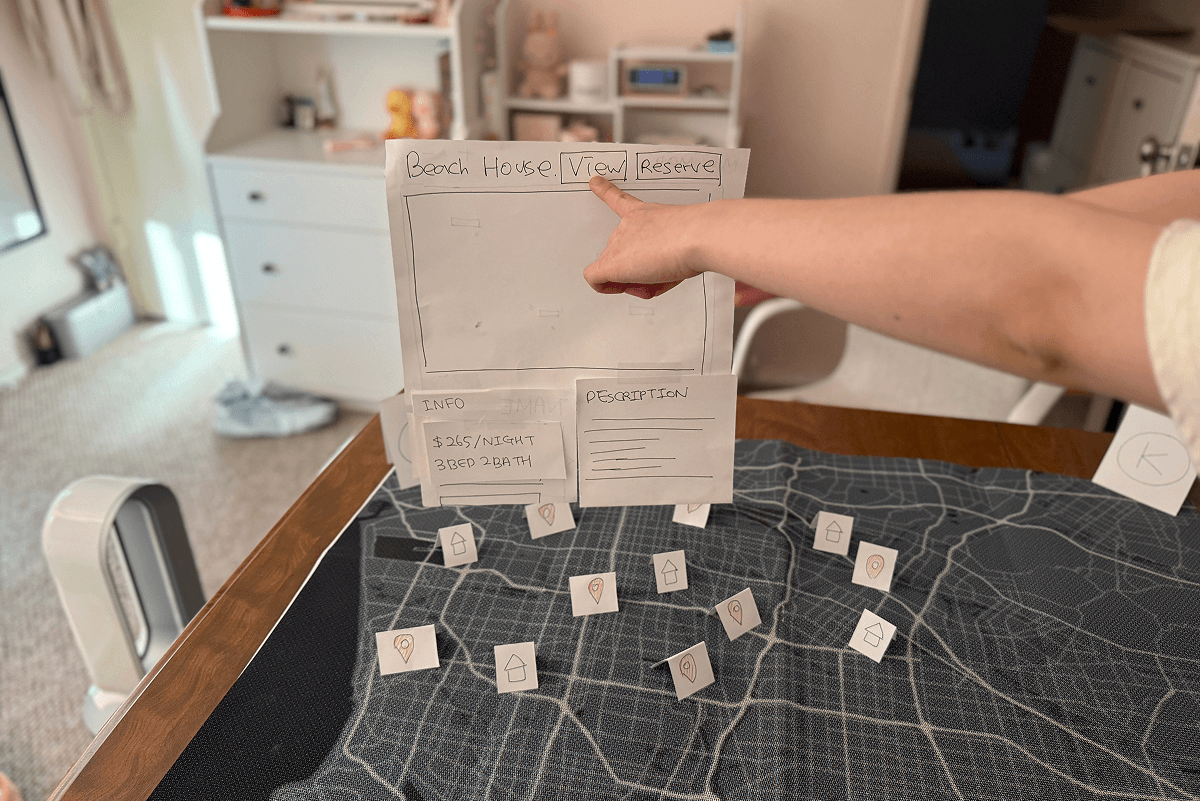
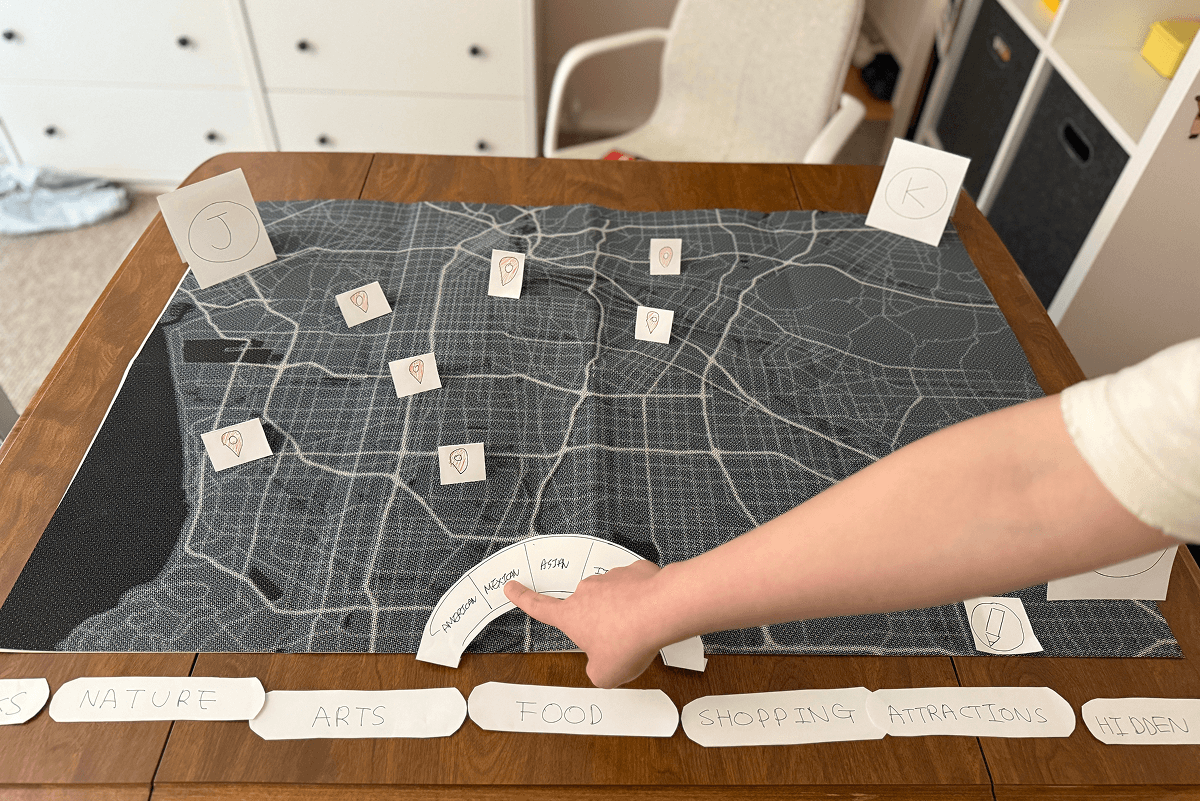
We started off by quickly exploring the structure of our AR travel-planning experience with low-fidelity paper prototypes, which allowed us to map out interactions, test layout ideas, and visualize how users may navigate between physical and digital touch points.
Explore Bookmarks
Reserve Airbnb
Plan Travel Route
After exploring with paper prototypes, we tested our paper prototypes with a few users to understand how they interpreted each step of the planning experience. Using these insights, we structured our screen flow to outline the key stages of the AR planning process.
•
Users struggled to understand the physical gestures and interactions during the bookmarking and planning stages
•
Users did not know where to start when exploring because they do not know anything about the area they are exploring
•
Older participants wanted fewer screens and clear instructions
•
Participants liked how the screen flow went from exploring bookmarks, reserving stays, and then planning route, which was the flow they were familiar with when planning for trips
•
System lacked a way of saving the travel route from this system to another platform for the users to view
Final Outcome
What is GatherRoute and how does it work as a complete system?
GatherRoute is an immersive travel planning system that combines a physical map with an AR interface, allowing groups to explore destinations, visualize Airbnb locations, and move through each planning step together. It creates a more collaborative and accessible planning experience for multi-generational travelers.
Scan Physical Map
Connect and Start Planning
Simply scan the QR code on the physical map to connect with the AR interface, enabling multiple users to join the travel-planning session.
Explore Your Area
Learn About the Destination
Quickly look through different areas within the city shown on the physical map, along with the system’s featured places to visit and key details that help users learn about each neighborhood.
Save Bookmarks
Find and Collect Places of Interest
Collaboratively add places each with priority preferences into a shared list, giving every group member a voice in what matters and making it easier to compare options and make informed decisions together.
Reserve Stay
Browse and Select Airbnb Stay
Easily review Airbnb stay options with details—including pricing, amenities, and an immersive AR view of the space—to help the group understand each stay more clearly and choose one that fits their needs.
Plan Trip Route
Map Out Detailed Travel Path
Collectively build a detailed travel path by arranging activities, stays, and points of interest, gaining a clear understanding of how each stop fits into the group’s overall trip sequence and daily flow.
Design System
How is information visualized within the bookmarks?
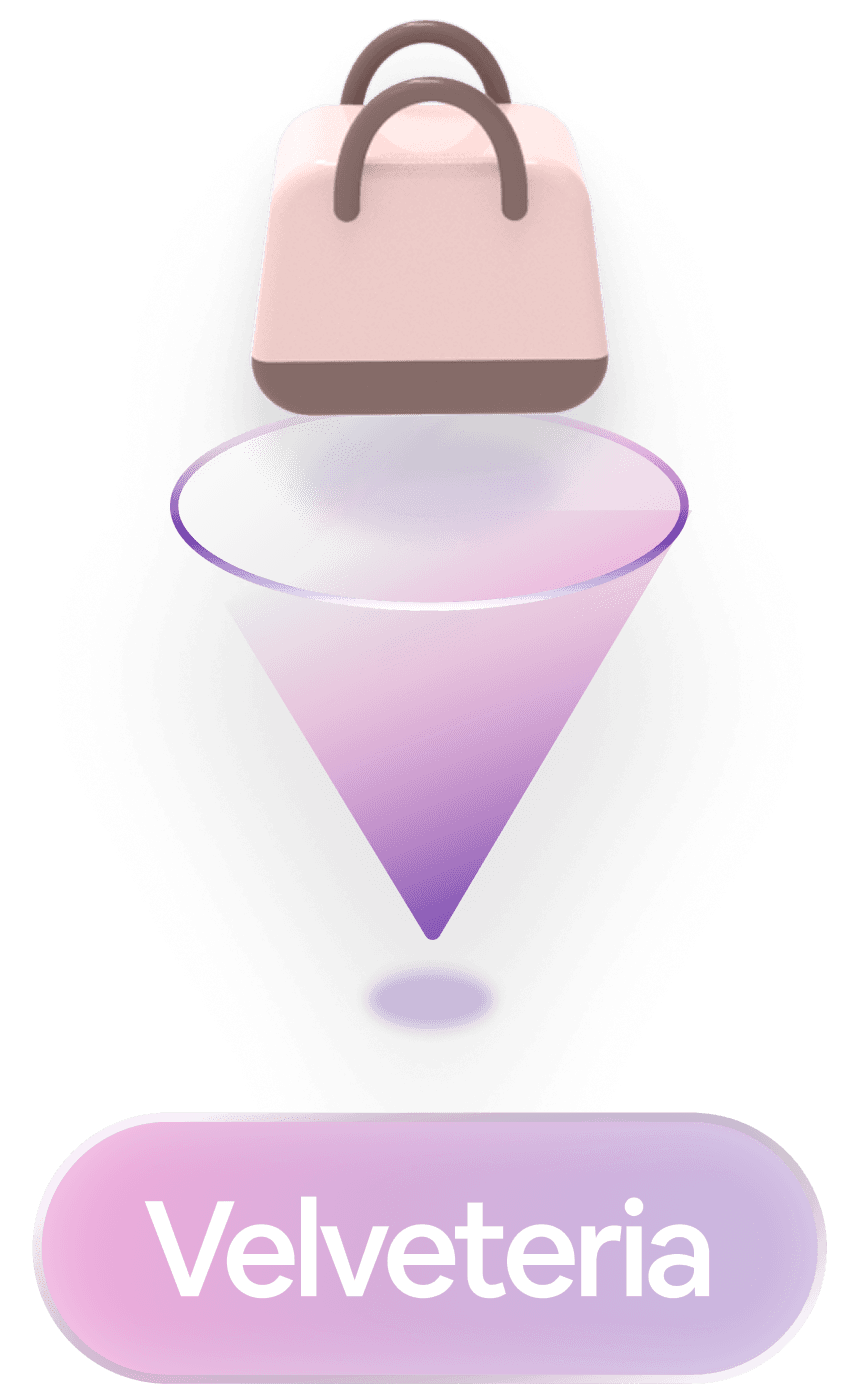
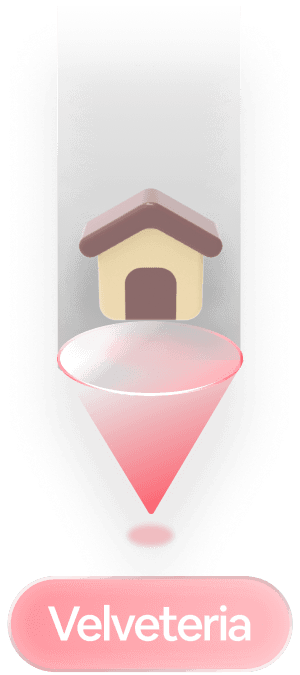
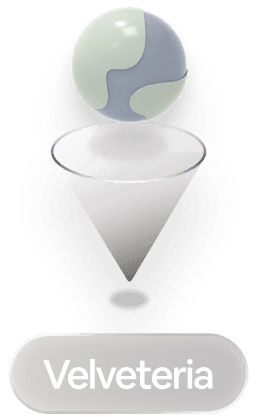
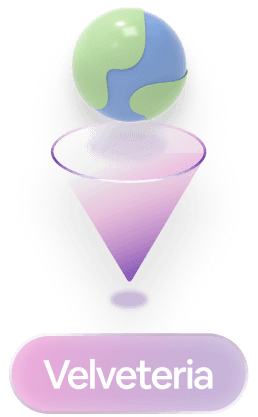
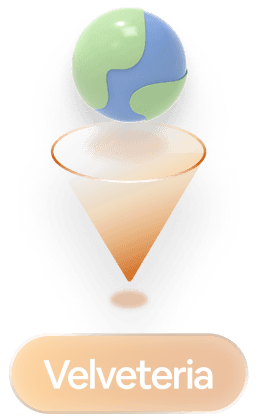
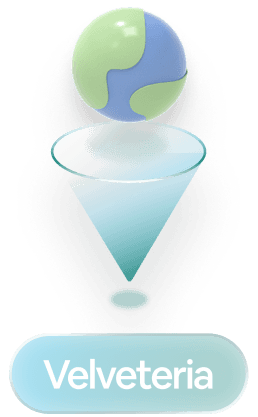
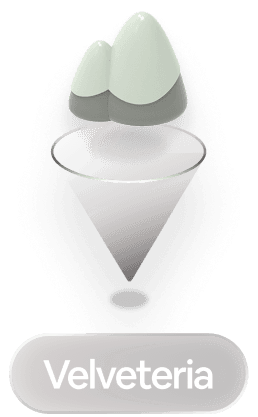
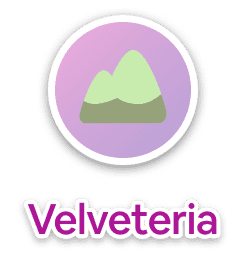
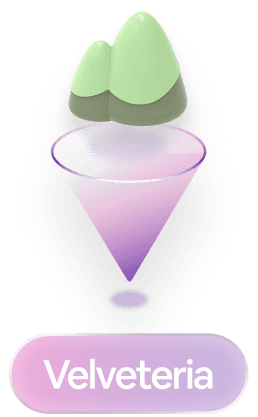
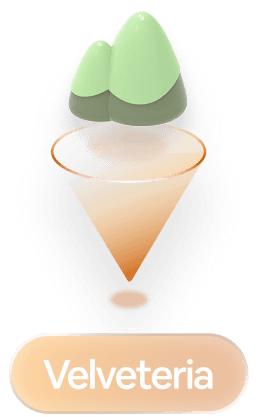
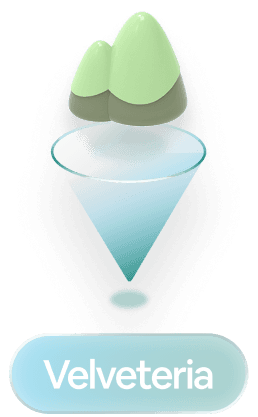
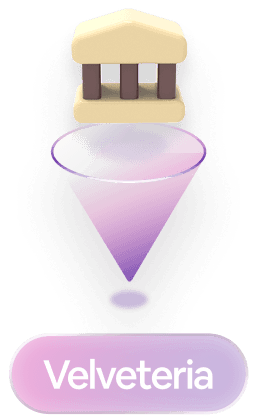
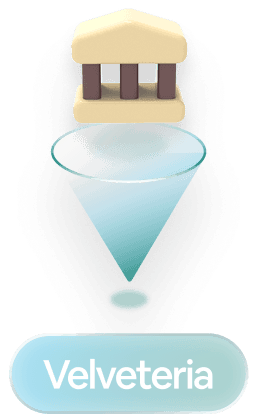
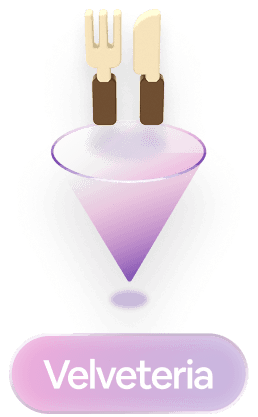
To make bookmarked places easy to understand at a glance, we visualized key details—such as location name, category, user color, and priority preference—in a clean, structured layout. We focused on making each 3D category icon visually connect with the corresponding 2D icon for users to make a clear connection between the pins both on the mini map and the physical map.
Data Representation
Category Icons

airbnb

landmark

nature

museum

shopping

entertainment

food
Priority Preferences



Color
default
airbnb
default
user 1
user 2
user 3
State Variations
default 2D
featured default 2D
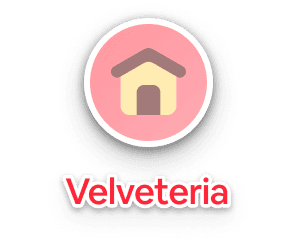
saved 2D
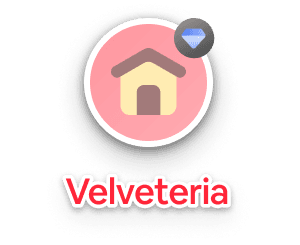
featured saved 2D

default 3D
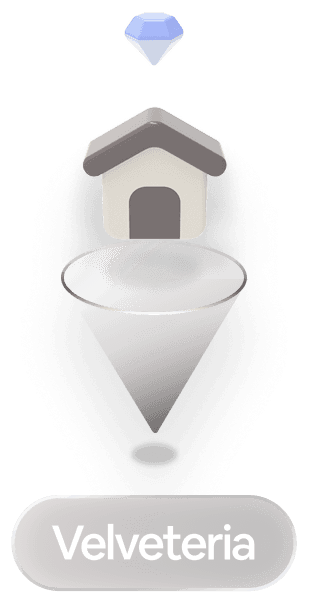
featured 3D

saved 3D
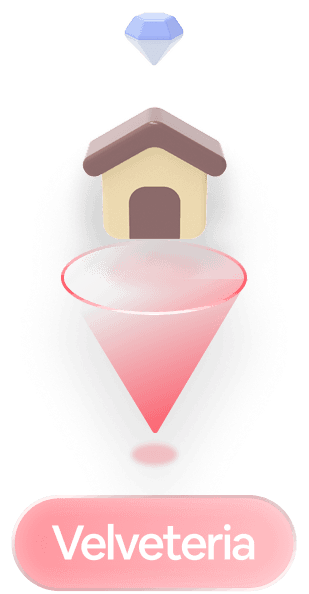
featured saved 3D

selected default 2D

selected saved 2D
selected 3D

clustered
2D & 3D Pins
Landmark


Nature


Museum





Shopping



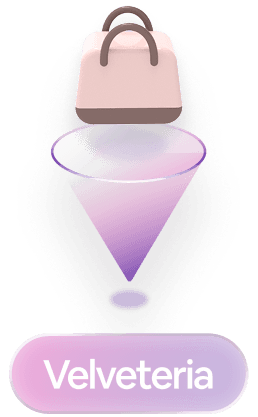



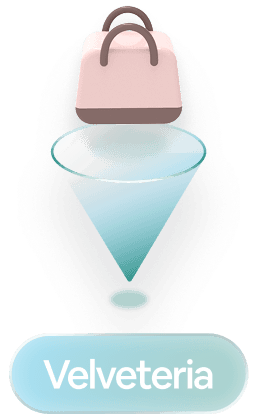
Entertainment

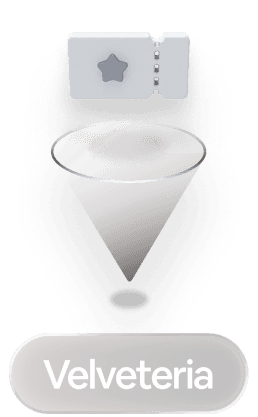

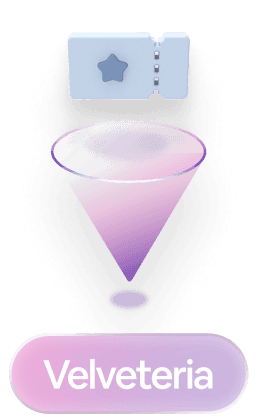



Food







Project Takeaways
What did this project reveal about designing collaborative travel planning experiences?
This project highlighted the value of combining physical and digital tools to support collaborative planning. By working with users from multiple generations, we learned how screen-based planning can unintentionally exclude some participants and limit shared decision-making. Exploring physical maps, AR overlays, and simple visual cues demonstrated how a hybrid system can create a more inclusive and engaging planning experience for everyone.